

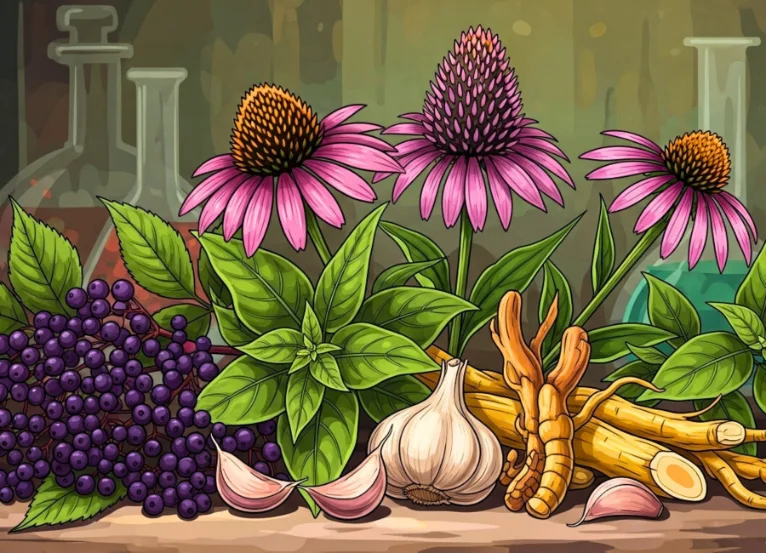
Understanding Herbal Immune Support
The global market for immune-supporting herbs has exploded, with elderberry sales alone increasing over 300% during recent years. Unlike pharmaceuticals that target specific pathogens, medicinal herbs work through immunomodulation—enhancing your body’s natural defense mechanisms without overstimulating the system. Research demonstrates that specific herbs can activate immune cells, increase antibody production, and reduce infection duration through measurable biological pathways.
1. Elderberry (Sambucus nigra): The Antiviral Powerhouse
Black elderberry stands as one of the most researched antiviral herbs, with compounds that directly block viral entry into cells while simultaneously enhancing immune response.
How Elderberry Fights Infections
Viral Inhibition: Elderberry’s anthocyanidin compounds block key viral proteins responsible for both viral attachment and entry into host cells. This dual-action mechanism prevents infection establishment at the cellular level.
Cytokine Modulation: Studies show elderberry increases inflammatory cytokine production by 2-45 fold, with tumor necrosis factor-alpha (TNF-α) showing the most dramatic increase at 44.9-fold. This activates immune system defenders including natural killer cells and macrophages.
Influenza-Specific Benefits: In randomized controlled trials, elderberry extract reduced flu symptoms to 3-4 days compared to 7-8 days with placebo—a symptom reduction of 4 days on average. Convalescent phase serum showed higher antibody levels to influenza virus in elderberry groups.
Respiratory Infection Protection: Systematic reviews demonstrate elderberry reduces both duration and severity of colds and upper respiratory infections, with emerging evidence for activity against coronavirus strains including SARS-CoV-2.
Clinical Evidence and Safety
Mechanism: The herb contains three categories of bioactive compounds working synergistically: anthocyanins (providing antiviral effects), polysaccharides (activating macrophages), and lectins called Sambucus nigra agglutinins that possess ribosome-inactivating properties against pathogens.
Safety Profile: Reviews confirm elderberry poses no cytokine storm risk despite earlier concerns. Studies found it modulates—rather than overstimulates—immune responses, with mild to moderate side effects rare even at therapeutic doses.
Dosage: 500-1,500mg daily of standardized elderberry extract (containing ≥13% anthocyanins). During active infection, some protocols use 15ml of elderberry syrup four times daily for 5 days.
2. Echinacea (Echinacea purpurea, E. angustifolia, E. pallida): The Immune Activator
Echinacea represents one of the most widely used immune herbs globally, with over 800 commercial products available. While clinical evidence remains mixed, laboratory studies reveal profound immune-enhancing mechanisms.
Immunomodulatory Mechanisms
Innate Immunity Enhancement: Research demonstrates echinacea profoundly affects immune cell numbers, granulocyte migration, macrophage phagocytosis, and natural killer (NK) cell cytotoxicity. These effects occur through multiple pathways simultaneously.
Cytokine Effects: Systematic reviews show echinacea decreases pro-inflammatory cytokines IL-6, IL-8, and TNF while increasing anti-inflammatory IL-10—suggesting balanced immune modulation rather than simple stimulation.
Active Compounds: Alkamides (lipophilic compounds), caffeic acid derivatives (cichoric acid and echinacoside), polysaccharides, and flavonoids all contribute to immunological activity. Studies indicate alkamides activate cannabinoid receptor CB2, triggering TNF-α mRNA upregulation.
Clinical Outcomes
Cold Prevention: Meta-analyses show echinacea decreases odds of developing common cold by 58% (OR 0.42; 95% CI 0.25-0.71) across multiple studies.
Duration Reduction: Cold duration decreased by 1.4 days on average (WMD −1.44, −2.24 to −0.64; p=0.01) with echinacea supplementation.
Limitations: Results vary significantly between studies due to differences in echinacea species, plant parts used, extraction methods, and dosing protocols. Some clinical trials show minimal benefits, while others demonstrate significant effects.
Dosage: 300-500mg three times daily of standardized extract at onset of symptoms, continuing for 7-10 days maximum. Echinacea purpurea appears most effective for cold treatment, while E. angustifolia shows promise for prevention.
3. Astragalus (Astragalus membranaceus): The Immune Tonic
Known in Traditional Chinese Medicine as “Huang Qi” (yellow leader), astragalus functions as an immune system adaptogen—balancing and optimizing rather than simply boosting immune responses.
Comprehensive Immune Support
Macrophage Activation: Studies show Astragalus membranaceus extract (AME) increases macrophage migration and immune mediator release via heparanase activation, enhancing host defenses against infections.
White Blood Cell Production: Astragalus polysaccharides (APS) stimulate multiple immune cell types including B cells, macrophages, natural killer cells, and dendritic cells. This broad-spectrum activation provides comprehensive immune enhancement.
Antibacterial and Antiviral: APS demonstrates dose-dependent bacteriostatic effects against Streptococcus, E. coli, and Staphylococcus aureus. Antiviral activity confirmed against respiratory viruses and SARS-CoV-2.
Anti-Inflammatory Balance: Unlike pro-inflammatory immune boosters, astragalus reduces inflammatory cytokines TNF-α and IL-1β while maintaining effective immune responses—crucial for preventing excessive inflammation.
Clinical Applications
Exercise-Induced Immunosuppression: In elite athletes, 500mg daily astragalus stabilized immune systems during intense training by restoring Th1/Th2 balance, preventing the typical post-exercise immune suppression that increases infection risk.
Respiratory Infection Protection: Reviews indicate astragalus reduces frequency and severity of respiratory infections when used preventatively, though more high-quality trials are needed.
Synergistic Effects: Often combined with other immune herbs like ginseng, with computational analysis revealing complementary mechanisms targeting different immune pathways.
Safety Note: Individuals with autoimmune conditions should avoid astragalus, as immune activation may exacerbate symptoms. Not recommended post-organ transplant due to potential interference with immunosuppression.
Dosage: 500-2,000mg daily of standardized root extract for prevention. Some studies use up to 30-60g daily for therapeutic purposes over 4 months with good safety profiles.
4. Andrographis (Andrographis paniculata): The Respiratory Specialist
Though less known in Western medicine, andrographis demonstrates powerful immune-enhancing properties specifically for upper respiratory tract infections.
Mechanism and Benefits
Immunostimulation: Andrographis increases production of immune cells and antibodies while enhancing phagocytosis—the process where white blood cells engulf and destroy pathogens.
Anti-Inflammatory Action: The primary active compound andrographolide reduces excessive inflammatory responses while maintaining protective immune function—important for managing cold and flu symptoms.
Cold and Flu Treatment: Multiple studies show andrographis reduces severity and duration of common cold symptoms by approximately 2 days when taken at first sign of infection.
Dosage: 400mg of standardized extract (containing 4-6% andrographolides) three times daily for up to 10 days during acute infections.
5. Garlic (Allium sativum): The Antimicrobial Shield
Fresh garlic and aged garlic extract provide broad-spectrum antimicrobial activity alongside immune-enhancing compounds that support multiple defense mechanisms.
Immune and Antimicrobial Properties
Allicin Power: When garlic is crushed, the enzyme alliinase converts alliin to allicin—a compound with proven antibacterial, antiviral, and antifungal properties. Allicin disrupts microbial cell walls and inhibits viral replication.
Immune Cell Activation: Garlic compounds stimulate macrophages, lymphocytes, and NK cells. Studies show enhanced immune cell proliferation and cytokine production with regular garlic consumption.
Cold Prevention: Research indicates daily garlic supplementation may reduce cold incidence by up to 60% and decrease symptom duration by approximately 1.5 days.
Cardiovascular Bonus: Beyond immune benefits, garlic supports heart health, reduces blood pressure, and improves cholesterol profiles—addressing inflammation at its cardiovascular roots.
Dosage: 600-1,200mg aged garlic extract daily for prevention, or 2-3 cloves raw garlic (crushed and allowed to sit 10 minutes to activate allicin). Aged garlic extract offers benefits without odor concerns.
Combining Herbs for Synergistic Effects
Evidence suggests combining immune herbs produces enhanced benefits through complementary mechanisms:
- Elderberry + Echinacea: Viral inhibition plus immune cell activation
- Astragalus + Ginseng: Broad immune modulation with adaptogenic stress support
- Andrographis + Echinacea: Dual respiratory tract protection
Studies indicate combinations often outperform single herbs, with one trial showing 86% reduction in cold incidence with echinacea plus vitamin C and propolis.
The Bottom Line
Science-backed herbs offer measurable immune support through multiple mechanisms:
- Elderberry reduces flu symptoms by 4 days and contains anthocyanins that block viral entry—use 500-1,500mg daily of standardized extract (≥13% anthocyanins)
- Echinacea decreases cold odds by 58% and shortens duration by 1.4 days through immune cell activation—take 300-500mg three times daily for maximum 10 days
- Astragalus provides comprehensive immune modulation and prevents exercise-induced immunosuppression—use 500-2,000mg daily as preventative tonic
- Andrographis specifically targets respiratory infections with 2-day symptom reduction—take 400mg standardized extract three times daily at infection onset
- Garlic reduces cold incidence by 60% through antimicrobial allicin and immune cell activation—consume 600-1,200mg aged garlic extract or 2-3 raw cloves daily
Key principles for herbal immune support:
- Start preventatively rather than waiting for illness
- Use standardized extracts with verified active compound content
- Combine herbs strategically for synergistic benefits
- Take at first sign of infection for maximum effect
- Avoid long-term echinacea use (cycle on/off every few weeks)
Important considerations: Herbs modulate rather than overstimulate immunity when used appropriately. Individuals with autoimmune conditions should consult healthcare providers before using immune-enhancing herbs. Quality varies significantly between products—choose reputable brands with third-party testing.